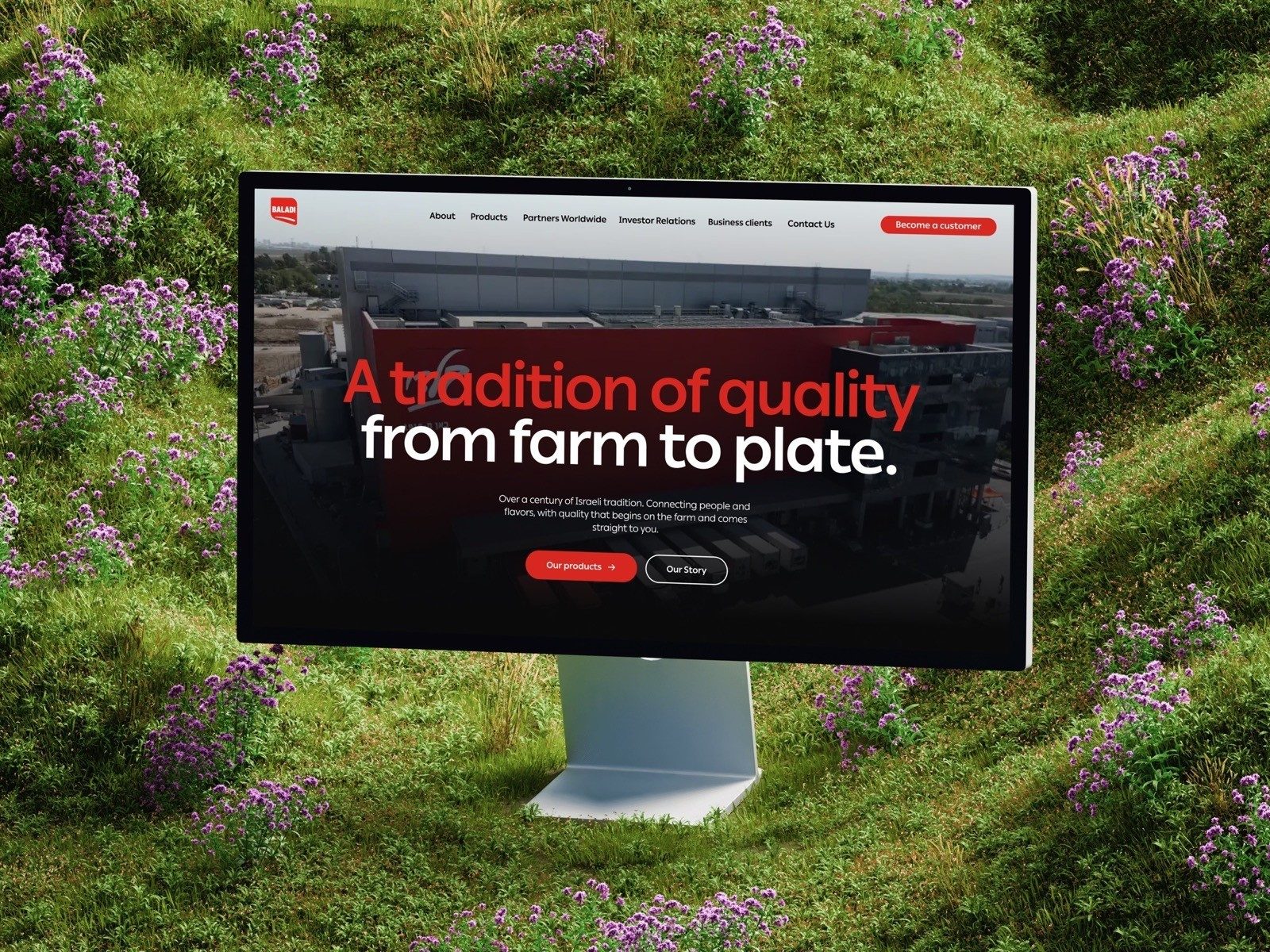
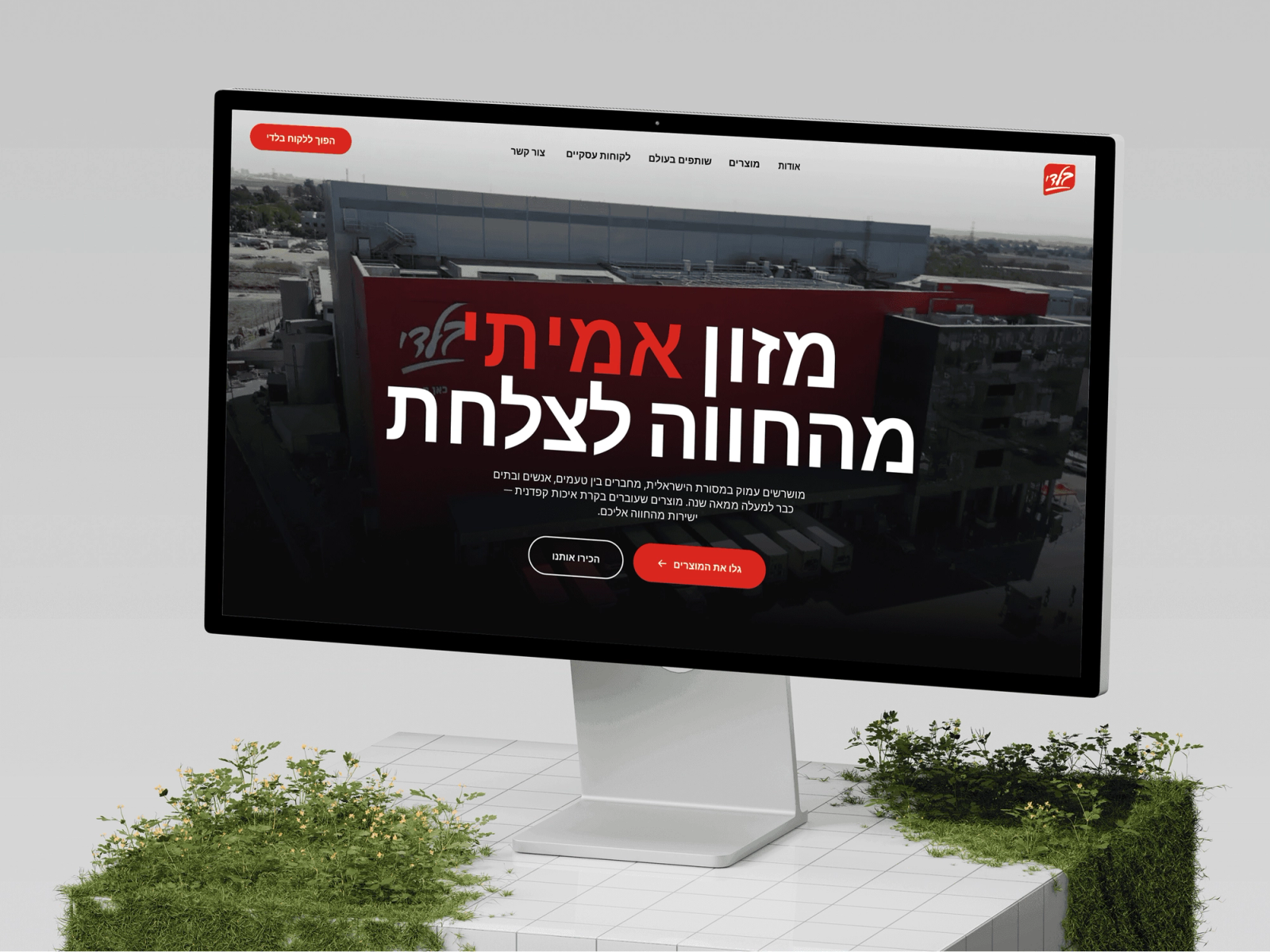
A bilingual digital presence, Hebrew and English, for a publicly traded, 108-year-old food importer, designed and built from scratch in 3 weeks.
Client
Baladi
Industry
Food & Agriculture / Public Company
Services
Website Design, Framer Development, Localization (Hebrew RTL + English LTR), CMS Architecture, Custom Code Components, Investor Relations, SEO, Copywriting
Tech stack
Framer, Framer Localization (RTL/LTR), Supabase Edge Functions, Yahoo Finance API, Zapier/Make, UserWay, Glassix, Custom SVG Charts
Year
2026


AGR Studio built a bilingual Hebrew and English website for Baladi, a 108 year old publicly traded Israeli food importer, in 3 weeks on Framer.
Baladi is one of Israel's oldest food companies, publicly traded on the Tel Aviv Stock Exchange, importing and distributing meat, fish, vegetables, and fruit from 38 countries since 1916. The business is domestic and international at once: a household name to Israeli consumers, and a sourcing-and-supply partner to global producers, retail chains, restaurants, hotels, and institutions.
Their previous website matched neither side of that story. It was outdated, had no investor relations presence, offered no English experience for international partners and investors, and gave the internal team no way to manage content on their own.
They needed a ground-up rebuild: a modern, fully bilingual site, Hebrew for the domestic market, English for international partners and investors, with a proper investor relations section backed by live stock data, a CMS the team could run without a developer, and a design that carries the weight of 108 years of history. The timeline was tight: roughly 3 weeks from start to launch.
Understanding the business. We joined Baladi's internal Slack and worked directly with Tamir Dahbany (Deputy CEO of Procurement), Mirit Gispan (Marketing Director), and Dor Dahabani (Business Development). Feedback loops closed within hours through live Framer preview links shared in the channel.
Two languages, four audiences. The site had to serve four distinct audiences across two markets at once: Israeli consumers looking for products, international B2B partners evaluating a supplier sourcing from 38 countries, investors monitoring a public company's performance, and job seekers exploring careers. We built the information architecture around those journeys and mirrored it across a Hebrew (RTL) and an English (LTR) version, so a consumer in Tel Aviv and a buyer for a hotel group abroad each land on a site that speaks their language, literally and commercially.
Content strategy. Copy was pulled from existing materials, the old website, PDFs, financial reports, then sharpened and condensed, and written natively for each language rather than machine-translated, so the English experience reads like it was authored for an international audience, not localized as an afterthought.
Designed directly in Framer. No Figma handoff. Every page, in both languages, was designed and built in Framer, eliminating the translation gap between design and development entirely.
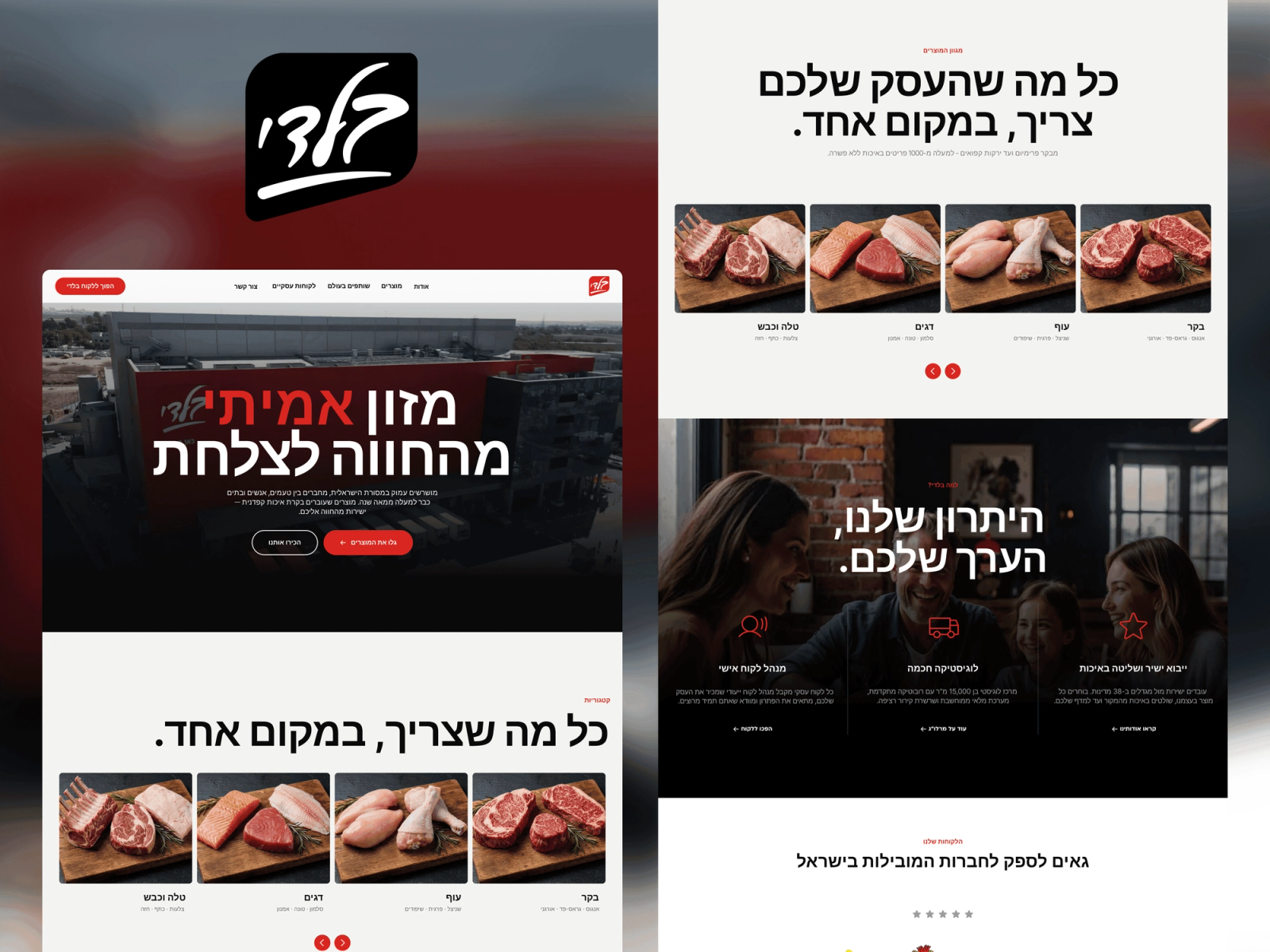
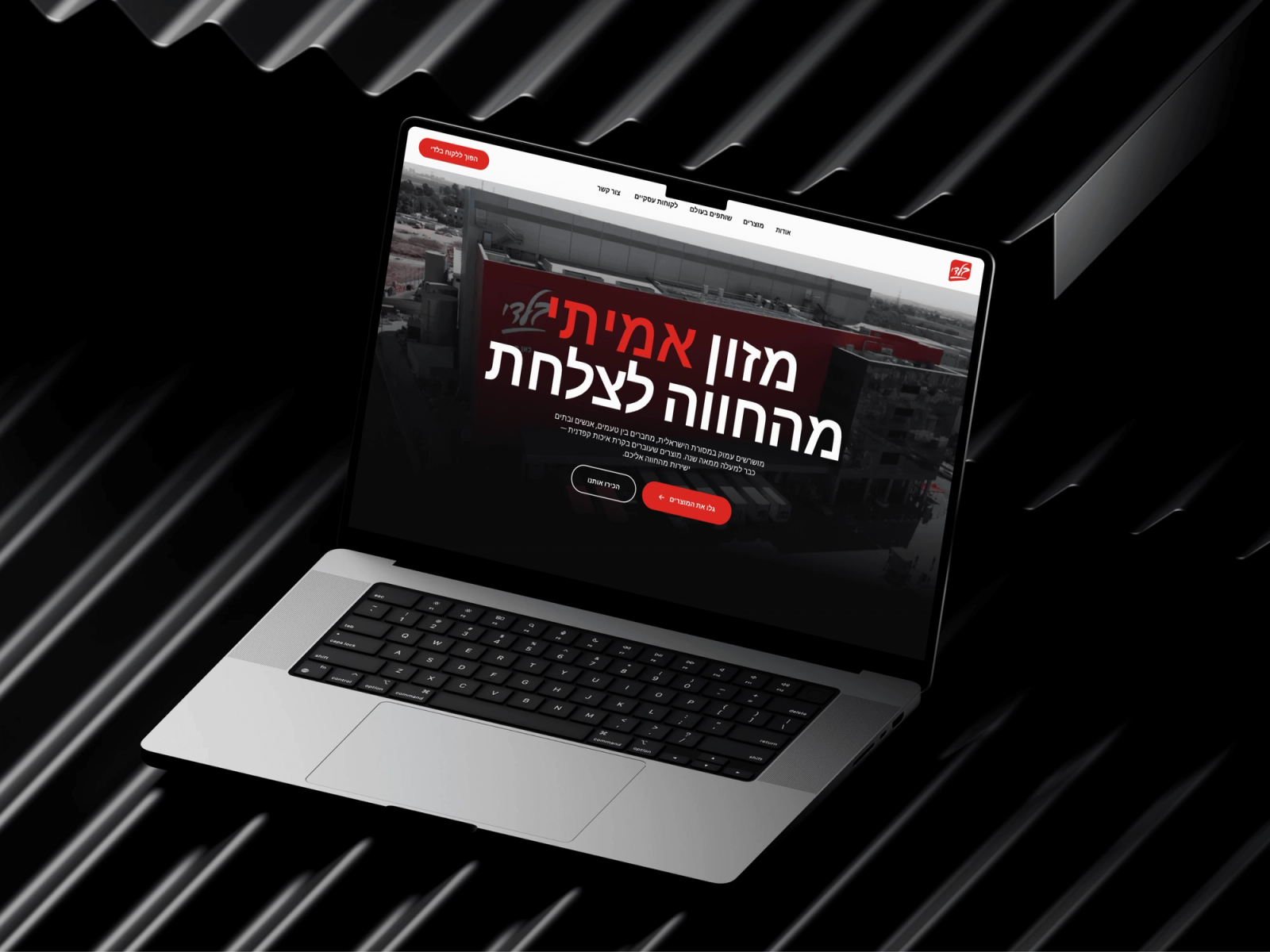
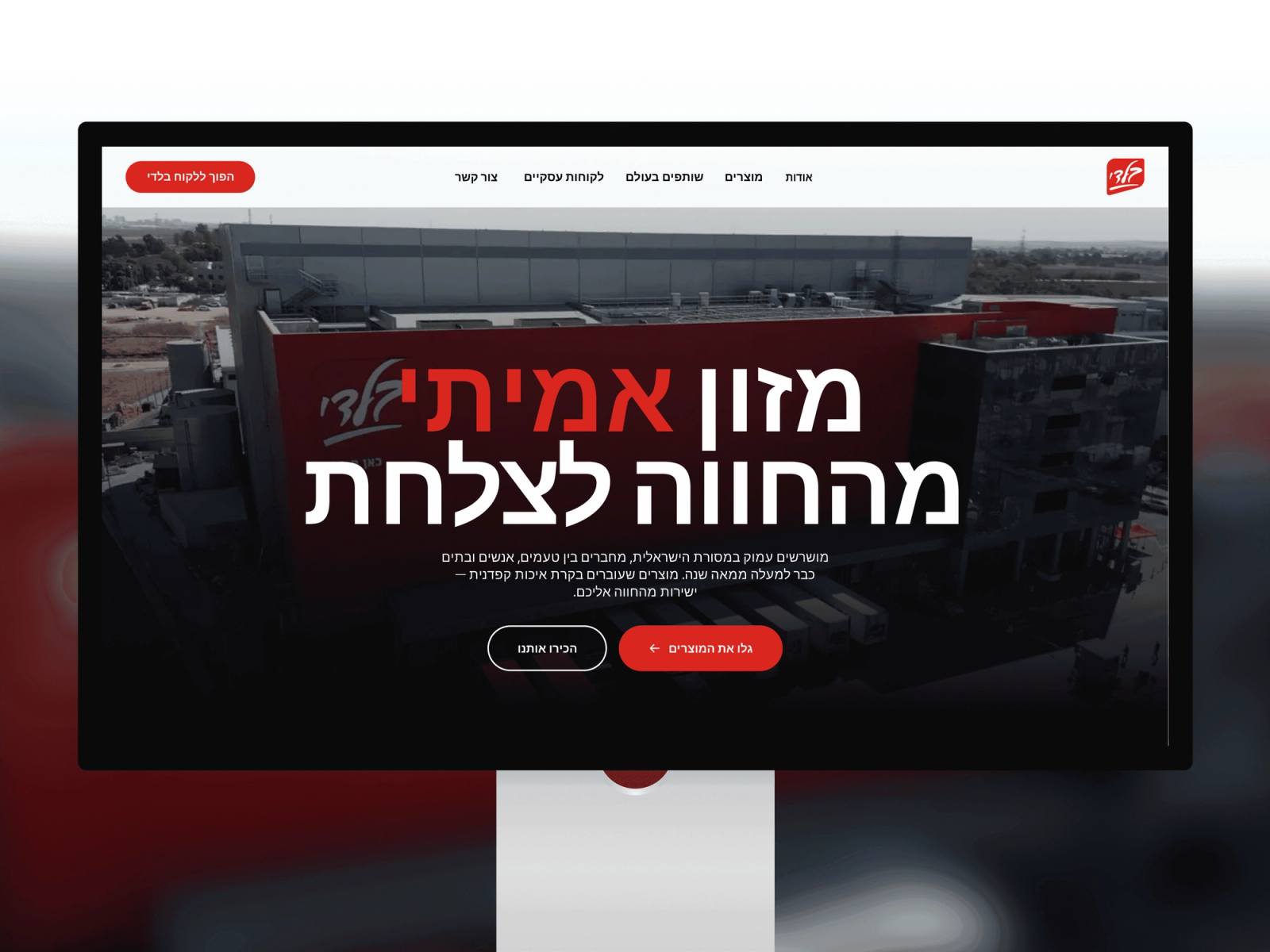
Bidirectional by design. The layout was built to work in both directions from the start: Hebrew right-to-left and English left-to-right, with typography, alignment, navigation, and component flow that flip cleanly rather than breaking. Large condensed headlines use Ping (a premium Hebrew typeface) on the Hebrew side, paired with a clean Latin face for English.
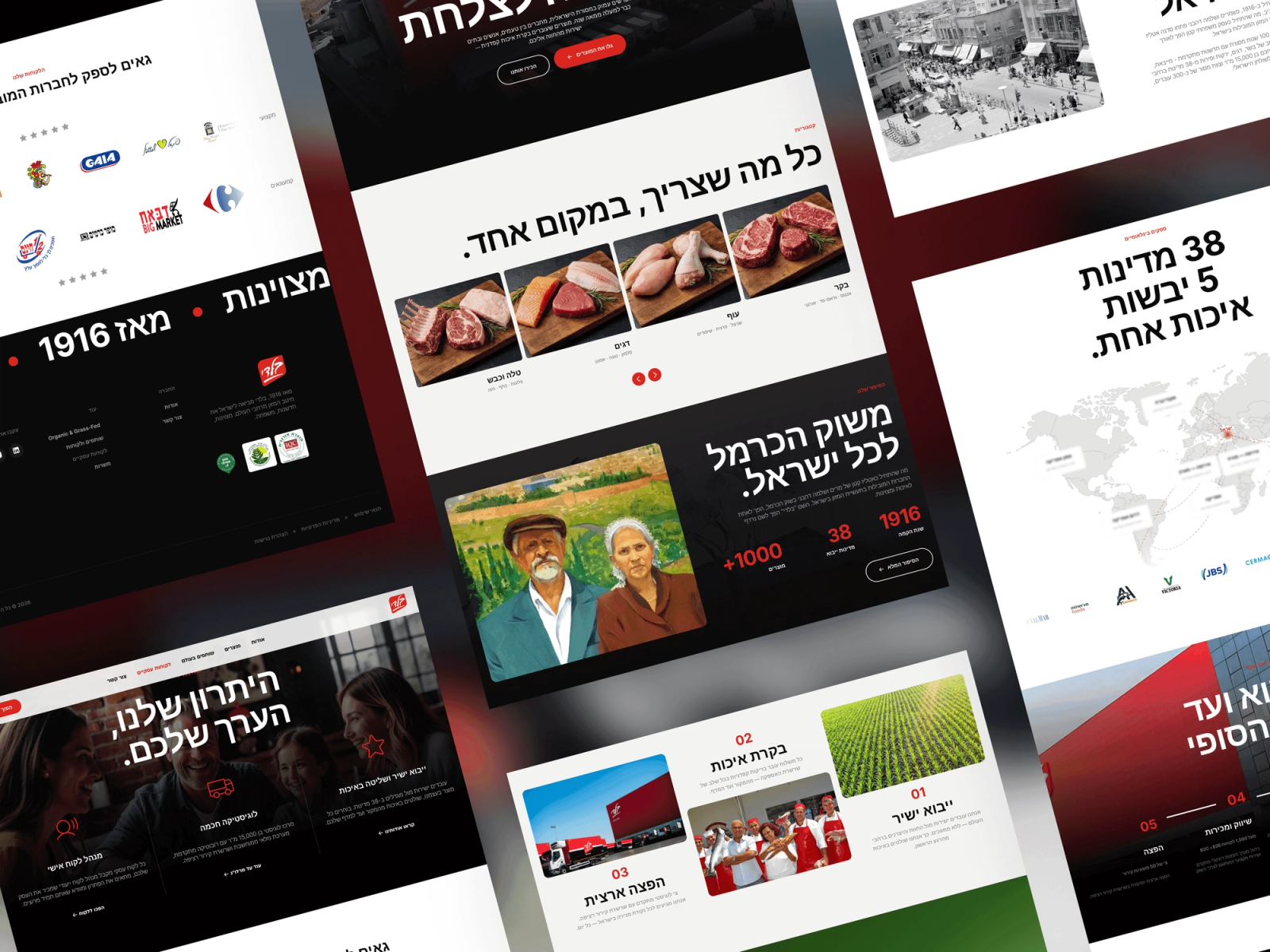
Visual language. We kept Baladi's existing red and black brand palette but modernized everything around it: generous whitespace, card-based sections, animated counters, and a confident editorial rhythm. The result feels contemporary while respecting a 108-year legacy, and holds up identically across desktop, tablet, and mobile in both languages.
Bilingual CMS architecture. We set up 6 Framer CMS collections, Products, Categories, Recipes, Careers, Logos, and Legal, with localization so the Baladi team manages Hebrew and English content side by side, independently, without touching code. The product catalog supports categories, series, sub-series, and filtering in both languages.
Live stock data widget. The standout technical piece: a custom Framer code component that fetches Baladi's real-time share price from Yahoo Finance via a Supabase Edge Function. It renders an interactive SVG chart (no external chart libraries) with 6-month and 12-month tabs, current price, percentage change, and market cap, plus a share-structure donut chart, auto-refreshing hourly with a static fallback.
Investor relations for an international audience. A full investor section with animated financial counters (revenue, gross profit, EBITDA, market cap, headcount), downloadable quarterly and annual reports, investor presentations, corporate governance with accordion UI for 15 executives and directors, and share-structure visualization, available in English so international investors and partners get the same depth as the domestic market.
Integrations & launch. Contact and lead forms via Zapier/Make, UserWay accessibility widget, Glassix chatbot, custom-domain DNS, and comprehensive SEO with localized meta on every page, robots.txt, and llms.txt.
Delivered on time. A complete bilingual digital presence for a publicly traded, 108-year-old food importer, launched on schedule. 12+ pages per language, 6 localized CMS collections, live stock data, custom code components, and a design that matches the scale of a business sourcing from 38 countries.
Built for both markets. The Hebrew site serves domestic consumers and job seekers; the English site opens Baladi to international B2B partners, retail chains, hotels, and global investors, each with dedicated sections and clear pathways. One build, two markets, no compromise on either.
Owned by the client. The Baladi team now manages products, job listings, partner logos, and legal content in both languages through the CMS, with zero developer dependency for day-to-day updates.
12+
Pages Built
6
CMS Collections
3 Weeks
Delivery