MindPeer

MindPeer

A unified three-site ecosystem for a national security AI decision-support company, designed and built from a single design system

Client

Mind-Alliance Systems

Industry

National Security / AI / GovTech

Services

Design System, Website Strategy, Figma Design, Framer Development, CMS, SEO, Cross-Site Navigation

Tech stack

Framer, Figma, Framer CMS, Cross-Site Ecosystem Footer, Scroll-Driven Animations

Year

2026

The project

The project

Multi-Site Design System & Development

AGR Studio designed a three site ecosystem for Mind-Alliance Systems with a unified design system, Framer CMS, and cross site navigation.

The brief

The brief

Mind-Alliance Systems is an AI decision-support company founded by national security strategist David Kamien, with over 25 years bridging high-stakes decision environments and AI architecture. MindPeer is their flagship SaaS platform, an AI-powered tool that structures intelligence workflows across five stages, from defining the decision question to building shared situational awareness.

The client operated three distinct but interconnected brands, a personal authority site (davidkamien.com), a consulting firm (mind-alliance.com), and a SaaS product (mindpeer.ai), each with different audiences and objectives, but no cohesive digital presence. The existing websites were outdated, lacked visual credibility, and failed to communicate the sophistication of the work. Budget: $10,000 for all three sites.

Discovery & strategy

Discovery & strategy

Brand Ecosystem Strategy

The project began with a comprehensive discovery phase to understand the relationship between all three brands and define how they should connect visually and structurally. Each site needed its own identity while feeling like part of a connected ecosystem, David Kamien's site as editorial and text-led, Mind-Alliance as institutional (inspired by Palantir), and MindPeer as product-led SaaS clarity.

Audience Mapping

Each site served two distinct buyer personas: executives and institutional decision-makers on one side, field analysts and operational teams on the other. The MindPeer site was prioritized first for an upcoming stakeholder presentation, with Mind-Alliance and the personal site following in sequence.

Design approach

Design approach

Unified Design System

A shared design system was developed as the foundation, typography hierarchy, color system built around institutional blue and neutral tones, spacing primitives, component library, and a diagram system using monochrome editorial linework for technical concepts. Each site received its own visual treatment within this system.

MindPeer, Product-First Design

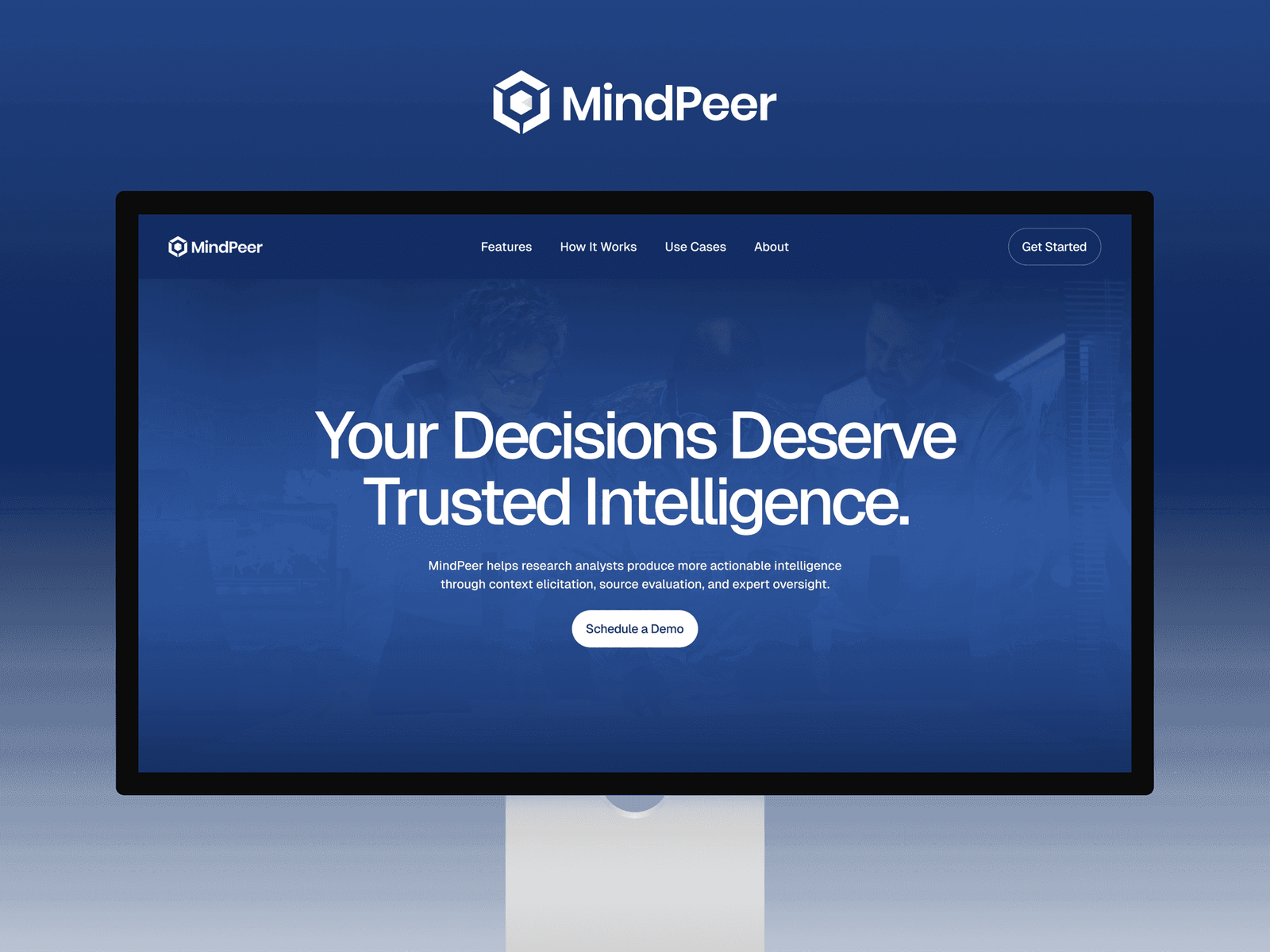
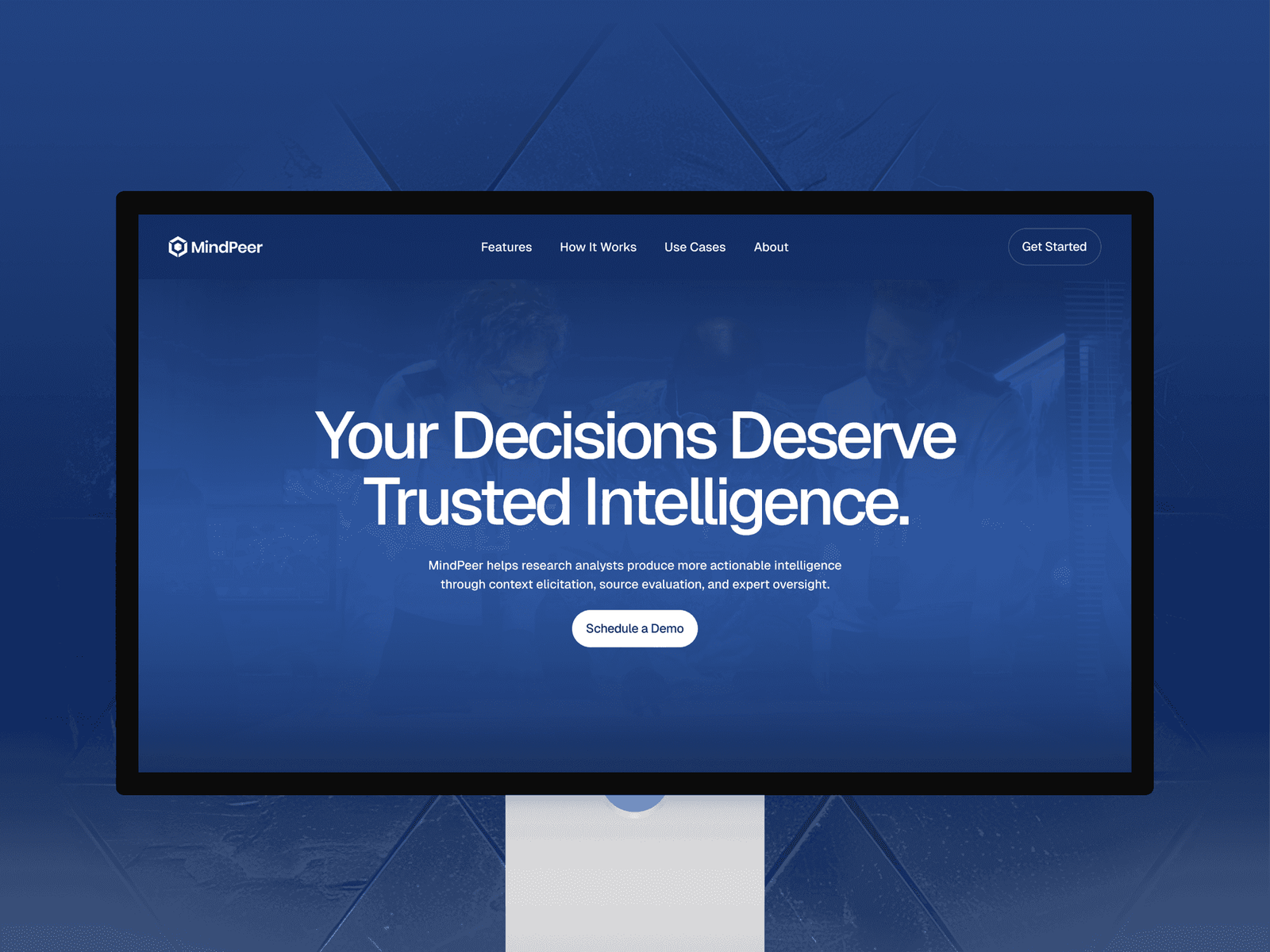
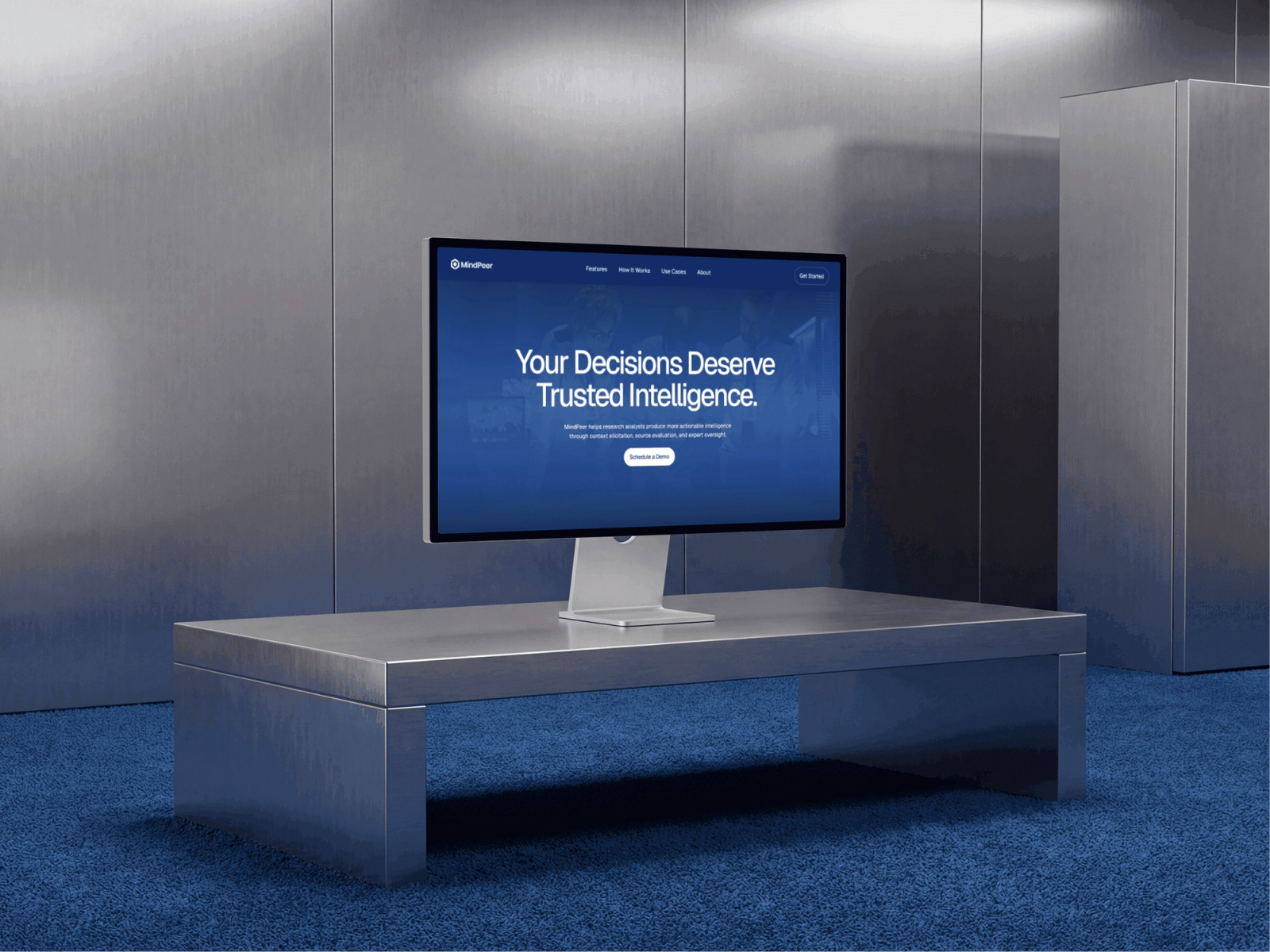
The MindPeer site was designed around the platform's five-stage intelligence workflow, using a dark hero transitioning to light sections. Bento grid layouts for feature presentation, scroll-driven animations revealing capabilities, illustrated diagrams replacing generic screenshots, and a conversational UI pattern showing the Intellibot AI agent in realistic decision-support dialogue.

Mind-Alliance, Institutional Authority

The Mind-Alliance site leaned into editorial restraint with generous whitespace, asymmetric layouts, and services architecture framing engagements around AI workflow design, executive training, strategic advisory, and curriculum development.

Development & build

Development & build

Three Framer Sites

All three websites were designed in Figma (desktop, tablet, mobile) and built in Framer with full responsive implementation. Framer CMS was implemented for resources and content management on the Mind-Alliance site, articles, research papers, and event listings supporting long-term SEO and thought leadership.

Cross-Site Ecosystem

All three websites share a unified ecosystem footer with cross-site navigation, consistent interaction patterns, and a cohesive visual thread that makes the relationship between brands immediately clear to any visitor moving between them.

Scroll-Driven Interactions

MindPeer featured scroll-driven animations to progressively reveal platform capabilities, with the five-stage workflow presented through interactive sections. Mind-Alliance used parallax animations and irregular layouts to convey strategic authority.

Results & impact

Results & impact

Three Connected Sites, One Ecosystem

The project delivered a connected three-site ecosystem that elevated Mind-Alliance's digital presence to match the caliber of their work and clientele. MindPeer launched first to support a critical stakeholder presentation, followed by Mind-Alliance and the personal platform.

Design System as Foundation

The unified design system ensured visual consistency across all three brands while allowing each site to speak to its specific audience, from national security executives evaluating AI advisory partnerships to product teams exploring MindPeer's decision-support capabilities. The component library and design tokens enable future scalability across all three properties.

3

Websites Built

$10K

Project Value

6 Weeks

Delivery

Projects

Continue exploring our latest work

Projects

Continue exploring our latest work

Projects

Continue exploring our latest work

Free 20-min intro call

Tell us what you're building

Work with a team that brings clarity, care, and creativity to every project.

Free 20-min intro call

Tell us what you're building

Work with a team that brings clarity, care, and creativity to every project.

Free 20-min intro call

Tell us what you're building

Work with a team that brings clarity, care, and creativity to every project.