What B2B teams ask before a website project: 101 conversations from 2026
- Category:
- Guides
- Updated:
- Oct 23, 2026
Ask AI about this article
We read 101 client conversations from 2026. Timelines came up in 49%, platform choice in 46%, speed in 35%. What B2B teams ask, and our answers.
 Artyum Grebenyuk Founder, AGR Studio
TLDR:
Across 101 conversations from January to October 2026, B2B teams asked most about timelines (49%), platform choice (46%) and speed and layout shift (35%). Our quotes put a standard B2B site at 3–5 weeks, homepage first. AI search was the smallest topic at 8%, but its mentions clustered in August to October.
We read 101 conversations AGR Studio had with B2B clients and prospects between January and October 2026 and counted what they asked about. Timelines came up in 49% of them, platform choice in 46%, and speed and layout shift in 35%. Budget followed at 31%, and AI search was the smallest topic at 8%, but its mentions clustered in August to October.
Below: what those teams asked, what we answered and the numbers we quoted. AGR Studio is a B2B brand and web studio in Tel Aviv and Dover, Delaware, with 170+ projects shipped.
How we counted
The data set is 48 recorded calls (sales intro calls and project calls, January to October 2026) and 53 project email threads (June to October 2026): 101 conversations in total, read on 22 October 2026. We coded each conversation by topic using keyword matching. One conversation can count under several topics, so the shares add up to more than 100%. Invoices, admin and spam are excluded. Questions are paraphrased and clients are anonymised. Prices and tool details are as of October 2026.
This is one studio's data, not an industry survey. Our clients are mostly B2B companies that chose to talk to a studio that builds a lot on Framer, and the email threads only cover June to October, so recent months weigh more. Read it as a field report.
What came up, and how often
| Topic | Conversations | Share |
|---|---|---|
| Timeline or launch date | 50 | 49% |
| Platform choice (Framer, Webflow, WordPress, HubSpot, Squarespace, Shopify, React, Craft) | 47 | 46% |
| Speed, performance and layout shift | 36 | 35% |
| Budget, pricing and payment terms | 32 | 31% |
| Looking premium, enterprise-ready or credible | 28 | 27% |
| Messaging: problem-first story, audience segments, personas | 28 | 27% |
| Video and motion-heavy pages | 28 | 27% |
| Design system, brand guidelines, components | 22 | 21% |
| CMS and self-editing without a developer | 21 | 20% |
| Migration, redirects, keeping traffic | 17 | 16% |
| SEO (any mention) | 15 | 14% |
| AI used in the work (copy, images, CMS agent, Claude) | 13 | 12% |
| AI search, GEO, LLM visibility, structured data | 9 | 8% |
| Multilingual or localisation | 7 | 6% |
Shares are of all 101 conversations, rounded down. Framer was named in 34 of the 101.
How long does a B2B website take in 2026?
In the quotes we gave this year, a standard B2B site took 3–5 weeks. With finished Figma files, 3–5 pages took 1–2 weeks to build. Timelines were the most common topic, raised in 49% of conversations.
We build the homepage first. It sets the components the other pages reuse, so the rest goes faster. The quotes we gave in 2026:
| Scope | Time we quoted |
|---|---|
| Standard B2B site, design and build | 3–5 weeks |
| Homepage, including feedback | 1–1.5 weeks |
| 3–5 pages from finished Figma files | 1–2 weeks |
| Porting a simple 6–8 page site to Framer | 4–5 business days |
| Simple Shopify store with two products | About 3 days |
| Migrating a site in 5 languages, with QA | 15 business days |
The most common version of the question was "can we launch in three weeks even though content isn't ready?" Our answer was yes. Design and CMS structure run in parallel with writing, and content goes into the CMS as each piece is ready.
For a public reference, the bilingual Hebrew and English site we made for Baladi, a public food importer, took 3 weeks. More on planning a short launch: how to launch a B2B website fast.
Which platform should a B2B website use: Framer, Webflow, WordPress or HubSpot?
Pick the platform your team can edit without a developer and that does what the site must do. Platform choice came up in 46% of conversations, and Framer was named in 34 of 101. Teams that chose Framer gave three reasons: they can edit pages without a developer, hosting is included ($10 or $30 a month on Framer's Basic and Pro plans, as of October 2026), and the editor feels like Figma.
Teams described WordPress as a stack of plugins that needs ongoing maintenance. One client compared against HubSpot's starter tier. Others were moving off Squarespace, Craft or a custom React build.
Two follow-up questions came up repeatedly:
- Can we sell on a Framer site? Yes, with Shopify as the headless backend, connected through a paid Framer commerce plugin.
- Can we use coded React components in Framer? Yes, with care. Content inside custom code components may not render without JavaScript, which hurts SEO. Framer's native components are server-rendered, so keep the text you want indexed in native components.
We build on Framer, Webflow, Shopify, Next.js, Astro and custom code, so the recommendation follows the team, not the tool. Comparisons: the best website platform for B2B SaaS and Framer vs Webflow for B2B.
Why is our website slow, and why does the page jump while scrolling?
Speed came up in 35% of conversations, mostly as two complaints: a slow first load where a heavy animation sits, and a page that shifts while scrolling. Both are fixable without dropping the design. Optimise how the animation and its assets load, and reserve space for every element before it loads.
The second complaint, "the page jumps a little while scrolling, even after it stops," is layout shift. Google measures it as Cumulative Layout Shift (CLS) and recommends a score of 0.1 or less at the 75th percentile of page loads (web.dev). One client sent their own checklist of causes, the best short list we have seen:
- Images without fixed dimensions or aspect ratios
- Sections whose height changes after load
- Font loading that makes text reflow
- Sticky or fixed elements
- Overflow set to hidden where clip would do
- Components that recalculate their height per viewport or breakpoint
- Custom smooth-scrolling scripts
Video and motion-heavy pages came up in 27% of conversations, often from studios whose work is video. Our rule: keep each hero video under about 5 MB, use short loops, and open the full video in an overlay on click. Details in video-heavy website performance.
How much does a B2B website cost in 2026, and what moves the price?
Price follows scope and time, so the timeline table above is the best guide we can publish here: 3–5 weeks for a standard B2B site. Budget, pricing or payment terms came up in 31% of conversations. Current price ranges are in how much a Framer website costs.
What moved price in this year's projects:
- Whether design exists. Building from finished Figma files is the short path.
- How many unique templates. Pages built from the homepage's components take less time than pages designed from scratch.
- Languages. We quoted 15 business days for a 5-language migration with QA.
- Migration. Every old URL needs a new one and a redirect, in every language.
- Motion and video. Heavy animation adds design time and performance work.
- Commerce. A simple two-product Shopify store was about 3 days of work.
Clients also asked about running costs. As of October 2026, Framer's paid site plans are $10 (Basic) and $30 (Pro) a month, and selling through Shopify adds a Shopify plan plus a paid commerce plugin. Our projects include a 2-week warranty after launch, and ongoing work runs through a website partner arrangement.
How do we make our website look enterprise-ready?
Use a light base, one accent colour, fewer elements and real product visuals. Looking premium, enterprise-ready or credible came up in 28 conversations (27%). The sharpest version was feedback a company relayed from its own prospects: "clean and well structured, but doesn't feel premium enough for enterprise buyers."
Clients named products such as Harvey and Rovo as references, and described the goal as "light, clean, negative space." The moves we used:
- A light base with generous negative space
- The 60-30-10 colour rule: 60% base, 30% secondary, 10% for a single accent
- Fewer elements per section
- Real product visuals or abstract imagery instead of stock photos of people
You can see these choices across our projects.
How do we write one homepage for several audiences?
Lead with the problem, then send each audience to its own page. Messaging came up in 27% of conversations, and one client set a good test: visitors should get the value in 30–45 seconds.
Two patterns repeated. First, several homepages led with the solution, and adding a short problem section before it made them clearer. Second, many B2B sites serve more than one audience:
- A nonprofit speaking to buyers and to grant-givers
- Solar software speaking to executives and to field contractors
- A venture-debt fund speaking to investors and to founders
The fix in each case was the same: a homepage section that routes each audience, and a landing page written for each one. More: why website copy comes before design and B2B demo request conversion.
Can our team run the website without a developer?
Yes, if the site runs on a CMS with documented components. CMS and self-editing came up in 20% of conversations and design systems in 21%. The usual question was "can our team add case studies and blog posts ourselves?"
Our setup is a draft-to-live workflow. An AI agent in the CMS can pre-fill a new entry from a brief, and a person reviews and publishes it.
One team told us, "we have no Figma; the website is our design system." A new page took them about 2 weeks. The plan: move content into a CMS and document the components as a single source of truth, to roughly halve that time.
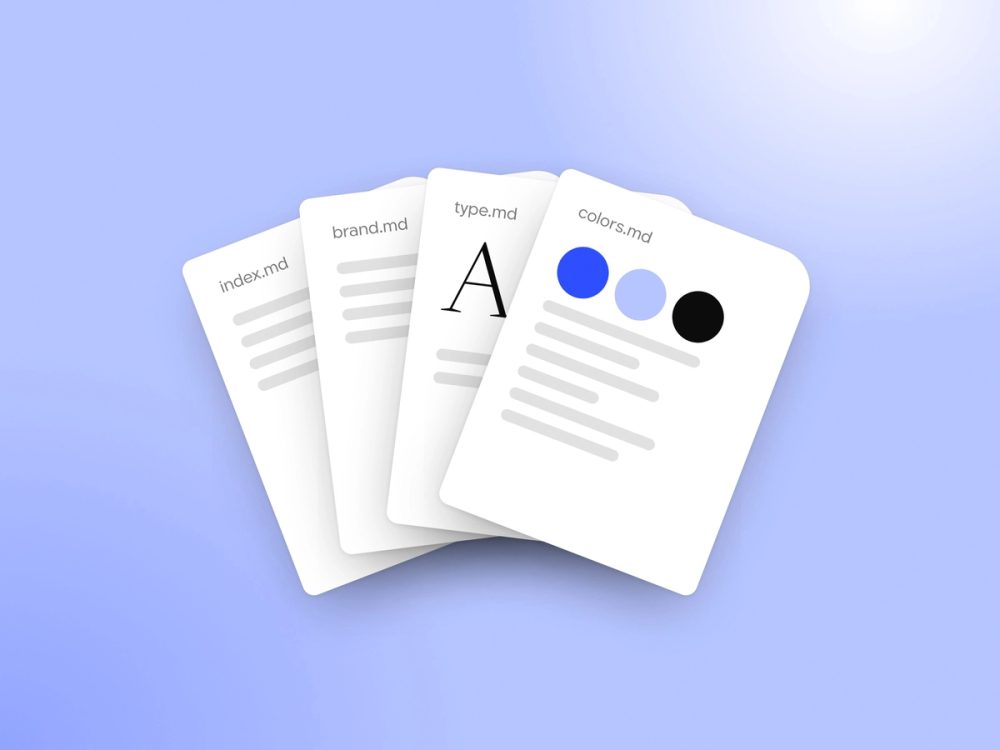
Design systems now have a second reader: AI tools. An enterprise client's team designs decks with Claude Design, so we sent the brand primitives (colours, type, spacing, components and tone) as Markdown files the tool could follow.
Read more: a CMS your team can run, scalable Framer design systems and who owns your website after launch.
How do we migrate a website without losing traffic?
Map every old URL to a new one, in every language, before launch. Migration came up in 16% of conversations, from teams moving off Craft, Squarespace, WordPress and custom React builds.
What we ask for at the start:
- CMS access, which finds hidden pages and existing redirects that a crawl misses, or a full URL export
- GA4 and Google Search Console access, to see which pages carry the traffic
- Nothing for backlinks: we pull those ourselves with Ahrefs
Translated SEO metadata is generated, not typed by hand. Multilingual work came up in 6% of conversations. For an ongoing multilingual example, our web team has worked with Marcura, a maritime B2B group, since 2024, including Chinese and Korean locales. Full process: website migration without losing SEO.
What are B2B teams asking about AI?
Two different questions. AI used in the work itself came up in 12% of conversations. AI search, meaning visibility in tools like ChatGPT, Perplexity and Google AI Overviews, came up in 8%, and those mentions clustered in August to October 2026. Part of that skew is our data, since the email threads start in June, but it was the newest question we heard.
Should we write our website copy with AI?
Founders already do. Several brought first drafts written with Claude; one estimated that about 95% of the words came from it. That works when someone then shapes the structure, hierarchy and calls to action, and when keyword research comes first. Other uses we saw: AI-generated images to avoid copyright issues with public photos, AI first-pass translation followed by a native speaker's edit, and the CMS agent above. Our take: AI website copy vs a copywriter.
How do we show up in Google and in AI answers?
Start with presence, then structure, then content. A newly launched enterprise company on a brand-new domain asked why Google didn't show it yet and what "SEO and GEO" would cost. Our answer, in order:
- Verify the site in Google Search Console and Bing Webmaster Tools.
- Submit the sitemap and add analytics.
- Publish the inner pages. A one-page site gives search engines little to index.
- Build consistent mentions and backlinks, so search engines and AI tools can tell the company apart from similarly named ones.
- Then publish content and monitor it over time.
We told them to expect to appear for their full name within days of verification.
A SaaS company migrating a site in 5 languages asked for "SEO and LLM optimisation." The gap was structured data: the site had no JSON-LD, which helps search engines and AI tools understand who a company is and what it does. Per-locale metadata should also be generated, not hand-typed. This is the work behind our technical SEO and AI discoverability service and AI-native websites. We publish our own AI fact sheet at /llms.txt.
What this means if you're planning a site
- Plan for 3–5 weeks, homepage first. Don't wait for final copy; content can go into the CMS as it's ready.
- Choose the platform by who edits it. Pick the editor your marketing team will use, and compare monthly running costs, not only the build.
- Fix layout shift before launch. Set image dimensions, control font loading and keep hero videos under about 5 MB.
- Write the problem before the solution, and give each audience its own path from the homepage.
- Look enterprise with less: a light base, one accent, real product visuals.
- Bring a URL export and analytics access to any migration, and map every URL in every language.
- Make the site readable by machines: structured data, verified Search Console and Bing accounts, real inner pages. AI search is the newest question in our data.
Not sure where your current site stands? Get a free design check.
FAQ
How long does it take to build a B2B website in 2026?
At AGR Studio, a standard B2B site was quoted at 3–5 weeks in 2026, with the homepage first (1–1.5 weeks including feedback) and the other pages built from its components. Building 3–5 pages from finished Figma files takes 1–2 weeks. Content doesn't need to be final to start, because design and CMS structure run in parallel with writing.
Is Framer a good choice for a B2B website?
It often is when the marketing team wants to edit pages without a developer. In 101 B2B conversations AGR Studio coded in 2026, teams chose Framer for self-editing, included hosting ($10 or $30 a month on Framer's Basic and Pro plans, as of October 2026) and a Figma-like editor. Keep text you want indexed in Framer's native components, because content inside custom code components may not render without JavaScript.
What does it cost to run a Framer website each month?
As of October 2026, Framer's paid site plans cost $10 a month (Basic) or $30 a month (Pro), and hosting is included. Selling online with Shopify as a headless backend adds a Shopify plan and a paid Framer commerce plugin. Ongoing design and development work is usually a monthly partnership or hourly support.
Why does my website jump while I scroll?
That is layout shift, which Google measures as Cumulative Layout Shift (CLS); a good score is 0.1 or less. Common causes are images without fixed dimensions or aspect ratios, sections that change height after load, font loading that reflows text, sticky elements, components that recalculate height per breakpoint and custom smooth-scrolling scripts. Reserve space for every element before it loads.
How do I migrate my website without losing SEO traffic?
Map every old URL to a new one with a redirect, in every language, before launch. Start from CMS access or a full URL export, since a crawl misses hidden pages and existing redirects, and use GA4 and Google Search Console to find the pages that carry traffic. Pull backlinks too, and generate translated SEO metadata instead of typing it by hand.
Why isn't my new company website showing up on Google or in AI answers?
A brand-new domain needs presence first: verify it in Google Search Console and Bing Webmaster Tools, submit the sitemap and publish real inner pages, since a one-page site gives search engines little to index. Add structured data (JSON-LD) and build consistent mentions and backlinks so search engines and AI tools can tell your company apart from similarly named ones. Expect to appear for your full company name within days of verification.
Blog